Maximum medical improvement (MMI) means your treating physician believes your medical condition has improved as much as reasonably expected with additional treatment. Reaching MMI does not necessarily mean you are fully healed, though.
Once you reach maximum medical improvement, your workers’ compensation benefits, disability rating, settlement options, and ability to return to work may all change. Understanding what MMI means can help you protect your rights and make informed decisions about your future.
If you have reached MMI or disagree with an insurance company’s determination, contact Matt Fendon Law Group.
Call (800) 229-3880 today for a free consultation with an experienced Scottsdale workers’ compensation attorney.
What Is Maximum Medical Improvement?
Many injured workers ask, “What does maximum medical improvement mean?”
Maximum medical improvement (MMI) is the point at which your physician determines that your injury has stabilized and that no substantial additional medical improvement is expected, even if you continue receiving medical treatment.
In other words, MMI means your condition has reached a plateau.
Reaching MMI does not necessarily mean you have fully recovered. Many employees continue living with permanent symptoms, physical limitations, or chronic pain after reaching maximum medical improvement.
How Is MMI Determined?
In Arizona workers’ compensation cases, your authorized treating physician typically makes the final determination regarding maximum medical improvement.
The doctor will evaluate several factors, including:
- Your medical condition
- Your response to treatment
- Surgical outcomes
- Physical therapy progress
- Diagnostic testing
- Whether additional treatment is expected to improve your condition
Sometimes the insurance carrier requests an Independent Medical Examination (IME) if it disputes whether you have reached MMI.
During an IME, another physician performs an examination and provides an opinion regarding your condition, treatment, work restrictions, and whether you have reached maximum medical improvement.
If the opinions differ, disputes may be resolved through the Arizona workers’ compensation process before the Industrial Commission of Arizona.
Does Reaching MMI Mean You Are Fully Recovered?
No.
One of the biggest misconceptions is that reaching MMI means an injured worker has returned to normal.
Maximum medical improvement simply means your physician believes additional medical treatment is unlikely to produce significant improvement.
Many workers who have reached MMI continue living with:
- Permanent pain
- Reduced mobility
- Permanent work restrictions
- Chronic symptoms
- Partial impairment
- Permanent disability
You may still require medications, periodic physician visits, injections, or other ongoing care even after reaching maximum medical improvement.
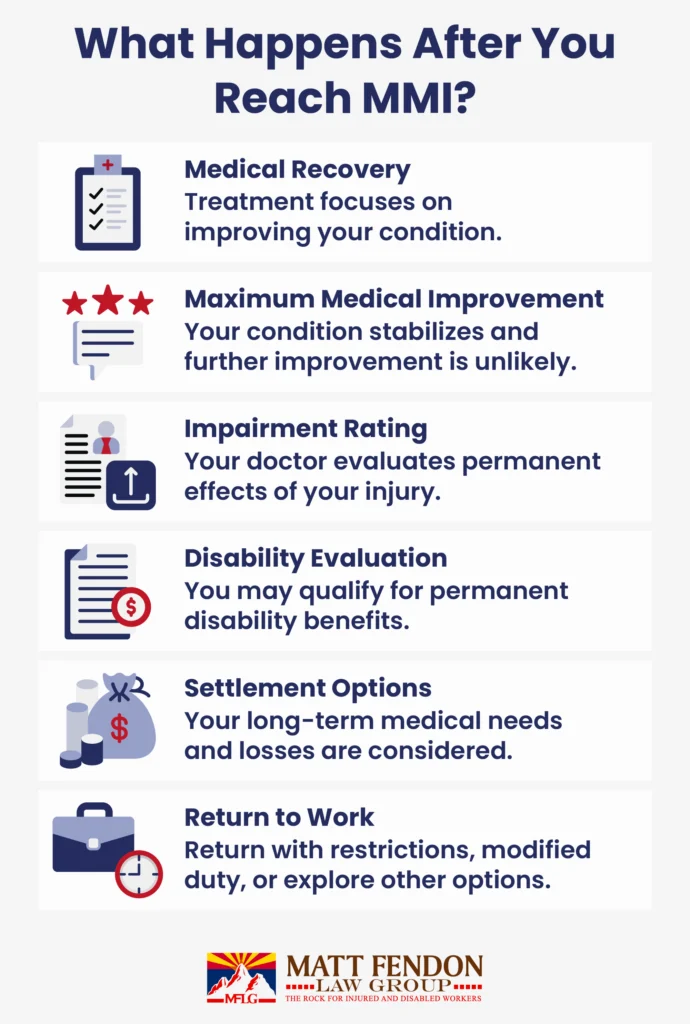
What Happens After You Reach Maximum Medical Improvement?
Reaching MMI changes several parts of your workers’ compensation claim.
Depending on your condition, you may:
- Stop receiving temporary disability benefits
- Receive an impairment rating
- Be evaluated for permanent disability benefits
- Return to work
- Return to modified duty
- Begin settlement discussions
- Continue receiving certain medical benefits if authorized
This stage often determines the long-term value of your workers’ compensation case.
How Does MMI Affect Workers’ Compensation Benefits?
Before reaching maximum medical improvement, many injured workers receive temporary workers’ compensation benefits while they recover.
These may include:
- Temporary total disability (TTD) benefits
- Temporary partial disability benefits
- Medical treatment
- Medical care related to the work injury
Once you have reached MMI, temporary benefits often end because your physician believes your condition is no longer expected to improve significantly.
If you have a lasting impairment, you may qualify for permanent disability benefits instead.
Does Workers’ Compensation Cover Pain and Suffering After MMI?
No. Arizona workers’ compensation does not pay for pain and suffering, even after you reach maximum medical improvement. It covers defined benefits like medical treatment and disability payments — not the broader damages a personal injury case can.
If someone other than your employer caused your injury, you may be able to bring a separate third-party personal injury claim that seeks pain and suffering. It is worth having an attorney review whether one applies to your situation.
What Is an Impairment Rating?
After maximum medical improvement, your physician may assign an impairment rating.
An impairment rating measures the permanent effects of your injury and helps determine whether you qualify for permanent disability benefits under Arizona workers’ compensation law.
An impairment rating is not the same as a disability rating, but it often plays an important role in determining compensation benefits and settlement value.
The severity of your permanent impairment can affect both your future income and your workers’ compensation benefits.
Permanent Partial Disability vs. Permanent Total Disability
After reaching MMI, an injured worker may qualify for either permanent partial disability or permanent total disability benefits.
Permanent partial disability generally applies when you can still perform some type of work despite permanent limitations.
Permanent total disability applies when your work-related injury prevents you from returning to gainful employment.
The amount of benefits available depends on several factors, including your impairment, earning capacity, wages, and the nature of your injury.
Can You Return to Work After MMI?
Many employees can return to work after reaching maximum medical improvement.
Depending on your physician’s recommendations, you may:
- Return to your previous position
- Return with restrictions
- Perform modified or light-duty work
- Need vocational rehabilitation
- Be unable to return to your former job
If your work restrictions reduce your earning capacity, additional workers’ compensation benefits may be available.
Can You Still Receive Medical Treatment After MMI?
Possibly.
Maximum medical improvement does not automatically end all medical treatment.
Some injured workers continue receiving future medical treatment that is reasonably necessary to manage their permanent condition.
Depending on your case, future medical care may include:
- Prescription medications
- Follow-up physician appointments
- Physical therapy
- Pain management
- Medical equipment
- Additional treatment related to your industrial injury
Whether future medical benefits remain available depends on your claim and any settlement that may resolve it.
Should You Settle Your Workers’ Compensation Claim After MMI?
Many workers’ compensation settlements occur after maximum medical improvement because the long-term effects of the injury are easier to evaluate.
Before agreeing to any settlement, it is important to consider:
- Future medical expenses
- Ongoing treatment needs
- Permanent disability
- Lost earning capacity
- Future income loss
- Permanent work restrictions
- Whether a lump-sum settlement or another settlement structure better meets your needs
Accepting a settlement too early may leave you responsible for future costs that were not fully anticipated.
An experienced workers’ compensation attorney can review the proposed settlement and help determine whether it fairly reflects the value of your claim.
What If You Disagree With an MMI Determination?
You have options if you believe you were declared at MMI too soon.
In some situations, additional medical evidence, another physician’s opinion, or an Independent Medical Examination may support continuing treatment or challenge the insurance company’s position.
Disputes involving maximum medical improvement can affect your benefits, disability determination, and settlement, making experienced legal representation especially important.
How a Workers’ Compensation Attorney Can Help
Maximum medical improvement is a major turning point in every workers’ compensation case.
An experienced workers’ compensation attorney can:
- Review your MMI determination
- Evaluate your impairment rating
- Challenge an unfavorable IME
- Protect your workers’ compensation benefits
- Negotiate with the insurance carrier
- Evaluate settlement offers
- Represent you before the Industrial Commission of Arizona
- Protect your rights throughout the legal process
Having an attorney involved can help ensure your claim accurately reflects the full impact of your work-related injury.
Maximum Medical Improvement and Your Arizona Workers’ Compensation Claim
Reaching maximum medical improvement does not mean your workers’ compensation case is over. Instead, it marks the point at which your physician determines that your condition has stabilized enough to evaluate permanent impairment, disability benefits, future medical needs, and potential settlement options.
If you have questions about maximum medical improvement, disagree with an MMI determination, or need help protecting your rights after a workplace injury, contact Matt Fendon Law Group.
Call (800) 229-3880 today for a free consultation with an experienced workers’ compensation attorney.