Yes, workers’ compensation generally pays for emergency room visits when emergency medical treatment is necessary after a work-related injury. However, Arizona workers’ compensation laws also require injured workers to follow certain procedures after receiving emergency care, and failing to do so may create problems with a workers’ compensation claim.
If you were injured at work and have questions about medical treatment or your claim, contact Matt Fendon Law Group.
Call (800) 229-3880 today for a free consultation with an experienced Scottsdale workers’ compensation attorney.
When Will Workers’ Compensation Cover an Emergency Room Visit?
Workers’ comp will generally cover an emergency room visit when emergency treatment is medically necessary.
Examples include:
- Serious falls
- Head injuries
- Broken bones
- Severe burns
- Crush injuries
- Heavy bleeding
- Chest injuries
- Eye injuries
- Electrical injuries
- Exposure to hazardous chemicals
If a reasonable person believes immediate treatment is necessary, seeking care at the ER is usually appropriate.
What if the Injury Is Not an Emergency?
Not every work injury requires an emergency room visit.
If your injury or illness is not life-threatening, your employer or its workers’ compensation insurer may direct you to an approved provider for treatment. Depending on the circumstances, urgent care may also be appropriate for certain work-related injuries that require prompt attention but are not true emergencies.
Following the employer’s procedures when emergency care is unnecessary can help avoid disputes over payment.
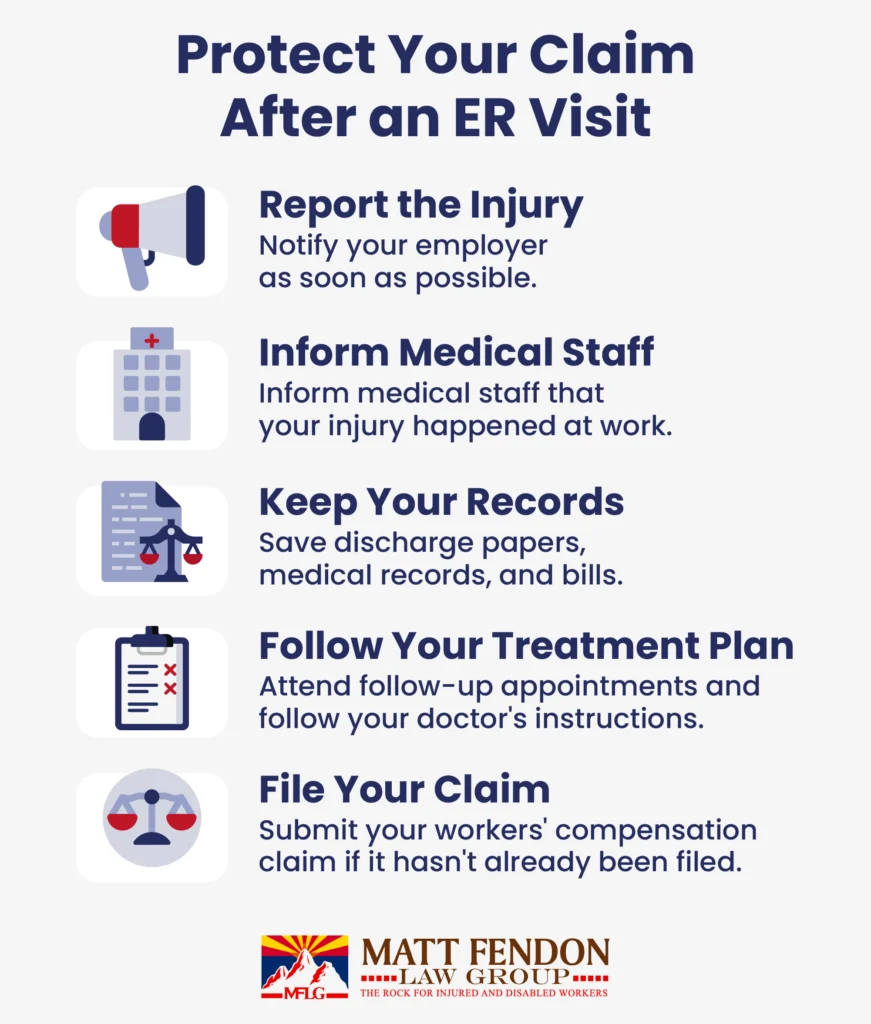
What Should You Do After Receiving Emergency Care?
After receiving emergency medical treatment, you should report the injury to your employer as soon as possible.
Arizona law generally requires employees to report workplace injuries promptly. Although emergency treatment should never be delayed because of paperwork, notifying your employer right away helps protect your right to workers’ compensation benefits.
You should also:
- Tell medical providers the injury happened at work.
- Provide your employer with information about the emergency room visit.
- Keep copies of discharge instructions, bills, and medical records.
- Follow all recommended treatment.
- File a workers’ compensation claim if one has not already been submitted.
These steps can make the claims process much smoother.
Can Workers’ Compensation Cover Emergency Room Bills?
Yes.
If the emergency room visit is related to a covered work injury, workers’ compensation generally pays reasonable medical expenses associated with emergency treatment.
Covered expenses may include:
- Emergency room services
- Physician services
- Diagnostic testing
- Imaging studies
- Surgery
- Hospital treatment
- Prescription medication
- Follow-up medical care
The workers’ compensation insurer generally pays approved medical providers directly, although billing issues sometimes arise if the claim has not yet been accepted.
Keep in mind that Arizona workers’ compensation covers medical treatment and a portion of lost wages, but not pain and suffering, which may only be recovered through a separate third-party injury claim.
What Happens After the Emergency Room Visit?
The emergency room is often only the beginning of treatment.
Depending on your injury, additional medical care may include:
- Follow-up appointments
- Physical therapy
- Specialist referrals
- Imaging studies
- Surgery
- Occupational therapy
- Pain management
Once the emergency has passed, ongoing treatment may need to be provided through an approved provider under Arizona workers’ compensation rules.
Who Pays the Emergency Room Bill?
On a covered claim, the workers’ compensation insurer pays approved medical providers directly, and you should not be billed for treatment related to your work injury.
Billing problems most often arise when a claim is still pending and has not yet been accepted.
If you receive a bill for emergency treatment, do not ignore it — provide the provider with your claim information and direct billing questions to the workers’ compensation insurer rather than paying out of pocket.
Do You Have the Right to Choose Your Own Doctor?
Arizona workers’ compensation rules can affect which medical provider treats your injury after the initial emergency.
After a work injury, your employer or its insurance carrier generally has the right to send you to a doctor of their choosing for your first visit. After that initial visit, most injured workers in Arizona may choose their own treating physician.
There is an important exception. If your employer is self-insured and has contracted medical care that is registered with the Industrial Commission of Arizona, you may be required to treat with the provider your employer designates, and a change of doctors is only approved in limited circumstances.
An experienced workers’ compensation attorney can explain how these rules apply to your specific case.
What if Your Claim Is Denied?
Even when emergency treatment was clearly necessary, a workers’ compensation claim can still be denied—often because the insurer questions whether the injury happened at work, whether it is connected to your job, or whether reporting procedures were followed.
A denial does not mean you are out of options. In Arizona, you generally have 90 days from the date of the notice of denial to file a Request for Hearing with the Industrial Commission of Arizona and challenge the decision. Because that deadline is strict, it is wise to act quickly and speak with a workers’ compensation attorney.
How a Workers’ Compensation Attorney Can Help
Workers’ compensation claims are not always straightforward.
An experienced workers’ compensation attorney can:
- Help file your claim.
- Gather medical records.
- Communicate with the insurer.
- Challenge denied claims.
- Protect your right to medical benefits.
- Pursue all available workers’ compensation benefits.
- Represent you throughout the legal process.
Getting assistance early can help avoid unnecessary delays and disputes.
FAQs
Does workers’ comp pay for emergency room visits after a workplace injury?
Yes. Workers’ compensation generally covers emergency room visits when emergency medical treatment is necessary because of a work-related injury or illness.
Will workers’ comp cover an emergency room visit before I report the injury?
Yes, emergency medical care should not be delayed. After receiving treatment, report the injury to your employer as soon as possible and follow the required claims process.
Does workers’ comp cover emergency room bills if my claim is still pending?
It can. If your claim is ultimately approved, the workers’ compensation insurer generally becomes responsible for covered medical expenses related to the workplace injury.
Contact Matt Fendon Law Group
If you were injured at work and required emergency medical treatment, you should not have to navigate the workers’ compensation system alone. Questions about emergency room bills, approved providers, denied claims, and ongoing medical care can quickly become complicated.
Matt Fendon Law Group helps injured workers throughout Arizona protect their rights and pursue the workers’ compensation benefits they deserve.
Call (800) 229-3880 today for a free consultation with an experienced workers’ compensation attorney.